Blog

Inspired

You see it on the calendar - school closed and you are either stoked to take a mini family vacation or are fretting about childcare for that day. If you are one of the ones who was fretting about child care I’m here to say I was right there with you. However, I’m also here to say that on the other side of all that hassle was something wonderful, something so fulfilling, and the best part is your children are going to get to experience it this year.

Kelly and I spent the weekend in Estes, soaking up all that we could at a Montessori Conference. We listened to seasoned teachers with 40 or more years of experience share their stories. We shared stories with fellow teachers in the trenches about what is working, what isn’t working, and brainstormed ideas on how to make things better - better for us as teachers, better for the children we serve, and better for the parents. We feverishly took notes on neurological studies that support Montessori education, on how to make tortilla soup with the children in a way that is acceptable in the eyes of the Health Department, and why it is so extremely important for children to be in contact with nature every single day. We came back with some new materials, new friends, and new ideas on things we thought we knew.

IMG_9686

So thank you for supporting us in learning more about how to do everything we do even better. We are most certainly inspired.
Excuse me!

Excuse me, excuse me, EXCUSE ME! Have you heard these words before? Often this is how children are taught to get an adults attention when they need something. While they are polite words, they can still be interrupting words.

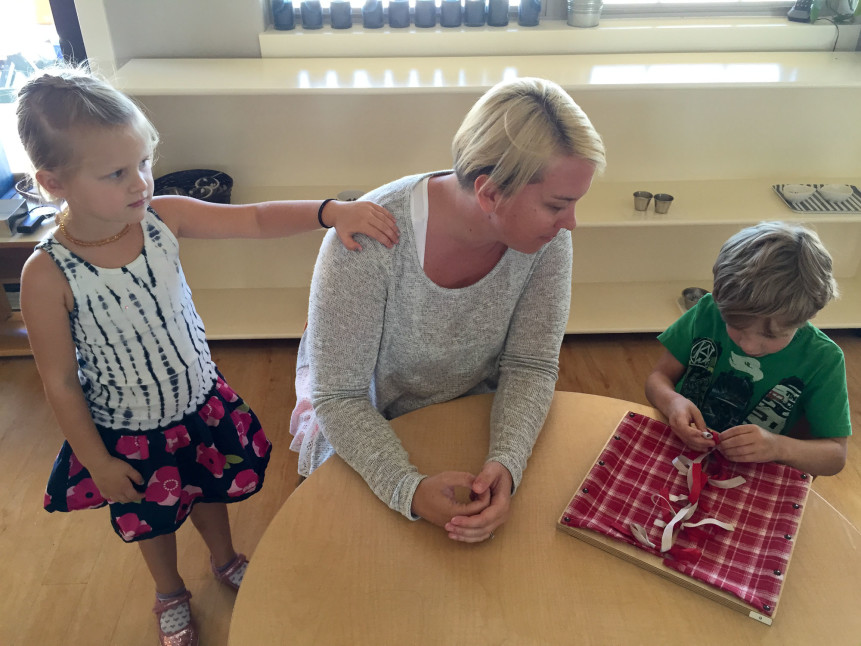
During our day in the classroom they is a beautiful hum of busy. Lessons are being given, children are working, teachers are teaching. At any given time we are needed to refill the snack bowl, get more tape, help someone in the bathroom, lead a game of I Spy, clean up a spill…the list goes on. Often we are giving lessons when we are needed for something else. If we taught the children to say excuse me every time they needed something - our busy hum would turn into a broken record of “excuse me.” In order to keep the lesson interruptions to a minimum, we teach the children to get our attention in a more peaceful manner. It looks like this:

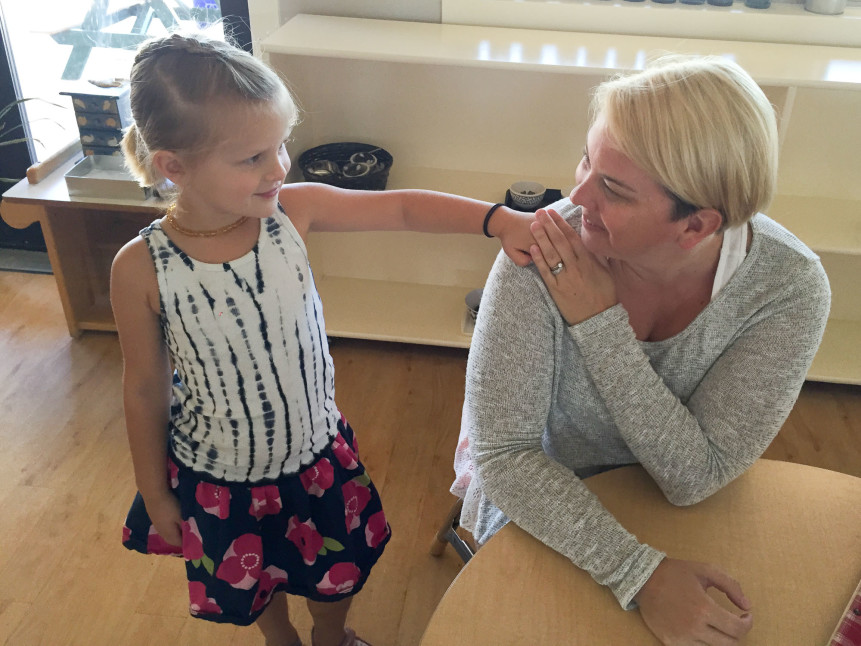
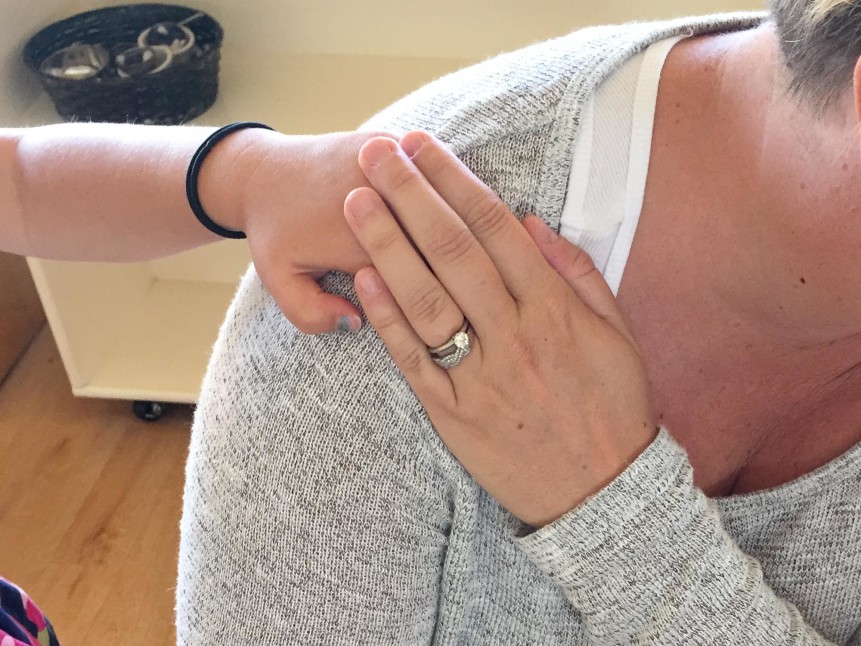
If we are in the middle of a lesson, we ask that the child place their hand on our shoulder, and wait patiently. This way, we know they need our attention, but our focus can remain steady for the task at hand.


IMG_9608

We then put our hand on top of their hand. This lets the child know that we acknowledge them, we understand they need our help, and we will be with them as soon as we can.

IMG_9609

Once the lesson is complete then we turn our attention to the waiting child and say, “Thank you for waiting patiently, what can I help you with?”

IMG_9610

This is such a simple gesture, it communicates need and acknowledgement, teaches patience, and allows the time and space necessary to honor each child’s needs. Even more wonderful, is that you can do this at home too!

Mean What You Say

Saying what you mean, and then truly meaning what you say…. and following though can be tough sometimes. I had one of those moments earlier this week where I said something and before it was even said I knew what the outcome would be. It went down like this:

“Hewitt, let’s get dressed, we need to leave for school in 5 minutes.”

“Nope”

“Do you want to go to school in your pajamas?” (By the way, this option is totally fine with me, but I knew that it wouldn’t be so fine with him)

“Nope”

“Then, please come here so we can get you dressed and ready for school.”

“No!”

“Okay, if you don’t come now, you will be going to school in your pajamas.”

….. nothing.

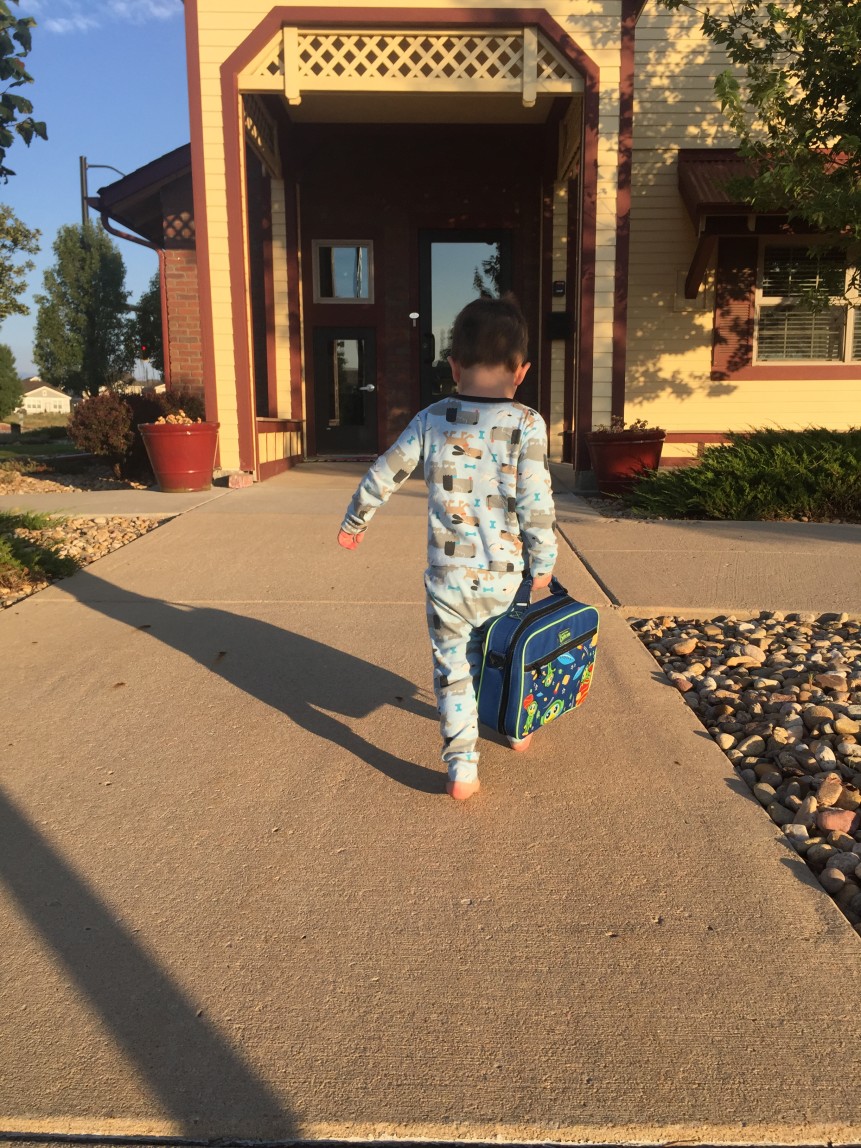
I finished gathering everything I needed for the day which included clothes for Hewitt for the day; however, let it be known that next time, (and there will be a next time) I will not be bringing clothes for him to change into. As the “get the car alarm” song was playing on my phone, we all marched out to the garage and loaded up. At that moment Hewitt didn’t really seem to care that he was in his pajamas. We dropped my youngest son off at daycare, then proceeded on our way to school. Still, nothing, no reaction, no conversation. We were about 1 minute away from school and he burst into tears and shouted, “I want my clothes!” There it was. I knew it was coming. I just calmly repeated back to him, “You want your clothes buddy? I understand, we will talk about this more when we get to school.”

IMG_9535

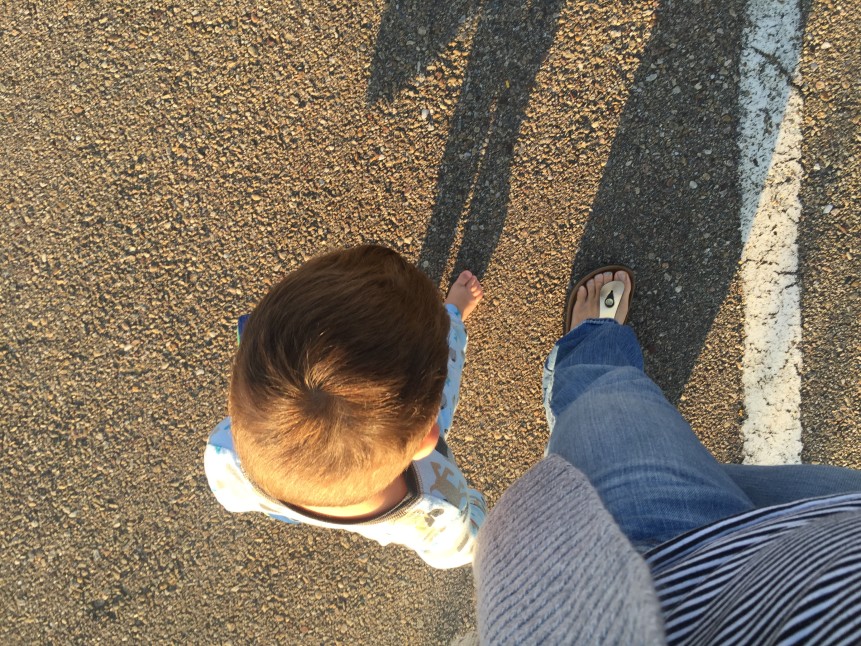
We walked into school hand in hand. He was a little teary. Inside my heart was aching for him too.

“But there is sand on my feet.” he whimpered.

“I know, that happens sometimes when we don’t wear shoes.” I calmly replied

IMG_9538

Once we got inside the school we sat at a table together and talked about everything that happened. He told me he wanted his clothes, I reminded him that we asked him to get dressed at home so he was ready for the day, and that he repeatedly said no. We talked about how next time he can either get dressed on his own, or with us when we ask him too, or he can spend the whole day at school in his pajamas.

I think the lesson is in there, though I’d bet real money that he’s going to be spending a day at school in his pajamas sometime. What’s more important is that he understands that I mean what I say. If I hadn’t brought him to school in his pajamas he would then know that my words don’t really mean anything. If there is no follow through, either with discipline or appreciation, then words have no value. I want my children to know that I mean what I say, whether it’s “If you don’t get dressed, you will have to go to school in your pajamas” or “I love you and care about you more than anything in the world.”